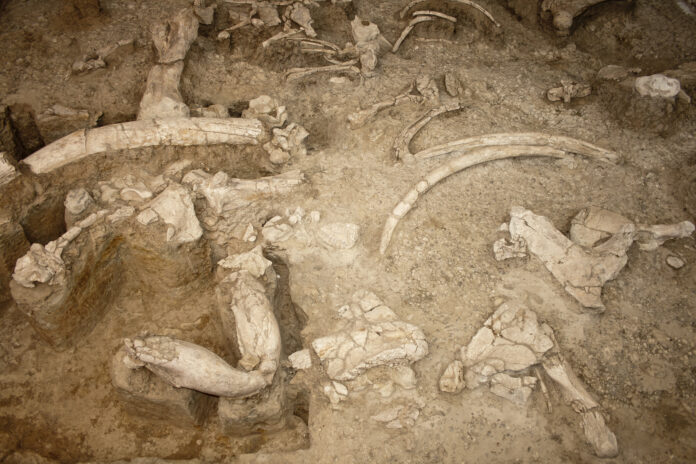

Colossal Biosciences has embarked on the most audacious scientific undertaking of the century: resurrecting an animal that last walked the Earth 4,000 years ago. But beneath the headline-grabbing premise of bringing back the woolly mammoth lies a more profound mission — developing revolutionary tools to combat an unprecedented biodiversity collapse threatening ecosystems worldwide.
From the ancient cave paintings of our ancestors to modern screen depictions, the woolly mammoth has maintained a powerful grip on human imagination. Now, advances in genetic engineering have transformed what was once science fiction into scientific possibility.
The foundation of this work lies in ancient DNA analysis. “What we have now is the genome sequences of several dozen, maybe more, mammoth genomes lined up against each other on a computer. And we have a bunch of sequences of Asian elephants and African elephants also on a computer,” explained Beth Shapiro, Colossal’s chief scientific officer.
“We line them up next to each other, and we can look at these sequences and ask, ‘Where in the genome are all the mammoths like each other but different from the elephants?’ This gives us an idea of potentially where some mammoth-specific mutations might be in the genome.”
Recent breakthroughs have significantly accelerated these efforts. The company announced a landmark achievement in generating elephant induced pluripotent stem cells — converting skin cells into stem cells capable of developing into any tissue type. This eliminates the ethical complications and practical limitations of harvesting elephant eggs, providing a foundation for creating genetically modified embryos.
“All of these are technologies that have application across genetic rescue and also even human health landscapes,” Shapiro told Gizmodo. “By giving us this moon shot — by saying we’re going to get to a mammoth — we have created a path. We have created a moon shot that forces us through these technologies in a way that I think otherwise we might not get there.”
Why Did the Woolly Mammoth Go Extinct? The Mystery Fueling Conservation
The woolly mammoth’s extinction serves as both a cautionary tale and a scientific puzzle. Despite ruling the Pleistocene epoch as a megaherbivore keystone species, mammoths vanished from most of their range around 10,000 years ago, with final populations persisting until approximately 4,000 years ago on isolated Wrangel Island in the Arctic Ocean.
Multiple factors contributed to their disappearance. A 10-year study from St. John’s College, University of Cambridge, England, revealed that warming temperatures transformed the mammoth steppe from grasslands into forests and shrublands, introducing vegetation that was unfamiliar and unpalatable to the mighty behemoth.
“As the climate warmed up, trees and wetland plants took over and replaced the mammoth’s grassland habitats,” explained Professor Eske Willerslev, lead author of the study. “And we should remember that there were a lot of animals around that were easier to hunt than a giant woolly mammoth — they could grow to the height of a double-decker bus.”
Human hunting pressure also played a significant role. University of Adelaide, Australia, researchers determined that human activity accelerated mammoth extinction in certain regions of Eurasia by approximately 4,000 years. “Our research shows that humans were a crucial and chronic driver of population declines of woolly mammoths, having an essential role in the timing and location of their extinction,” noted Damien Fordham, associate professor at the Environment Institute.
The final Wrangel Island population, despite having no predators and minimal environmental pressures, eventually succumbed to genetic vulnerabilities and random catastrophic events. “It was probably just some random event that killed them off, and if that random event hadn’t happened, then we would still have mammoths today,” stated study co-author Love Dalén, a founding member of the Swedish Centre for Palaeogenetics.
From Ancient Specimens to Modern Laboratories
The scientific feasibility of mammoth de-extinction hinges on exceptionally preserved specimens discovered in permafrost regions. December 2024 marked a watershed moment with the unveiling of “Yana,” a baby woolly mammoth found in eastern Siberia’s Batagaika crater. At just 4 feet tall and 400 pounds, this 50,000-year-old specimen offered unprecedented insights into early mammoth development.
Unlike typical fossils, which preserve only hard tissues, mammoths found in permafrost often retain soft tissue, organs, and DNA within their cells. This preservation results from “chromoglass” — a natural process where extreme cold and dry conditions create a glass-like state, preserving genetic material at the molecular level.
These exceptional specimens provide the blueprint for Colossal’s genetic work. The company isn’t attempting to clone intact mammoth cells (which don’t exist) but rather to identify and introduce specific mammoth genes into elephant genomes.
“Once an organism dies, the DNA in all of its cells starts to get broken down into smaller and smaller pieces, until eventually there’s nothing left. Our job as ancient DNA scientists is to try to figure out how to pull those tiny, broken pieces of DNA out of these cells. But that is not the same as having an intact cell or an intact nucleus,” Shapiro explained.
“Where does CRISPR come in? We don’t have a living cell that is a mammoth. … We have our elephant cell, and in that elephant cell we have the elephant genome. And we know very specific places in that genome where we want to tweak the DNA sequence to make that sequence more mammoth-like.
“We know which parts we want to change because we’ve compared all the mammoth and elephant genomes and identified the mutations we want to make. That is where we need to use the tools of genome engineering like CRISPR. We will use CRISPR to genetically modify that elephant genome sequence so it looks increasingly more mammoth-like.”
The technological innovations developed for mammoth de-extinction already demonstrate immediate conservation impact. Colossal’s research is helping combat elephant endotheliotropic herpesvirus — the single largest cause of death in young elephants across North America, Europe, and Thailand.
Colossal’s work challenges long-held assumptions about extinction as a permanent state. By pushing the limits of genetic science, the company is reframing conservation as an active, interventionist science. If successful, this approach could redefine how we protect species, restore ecosystems, and reckon with humanity’s role in shaping the future of life on Earth.


