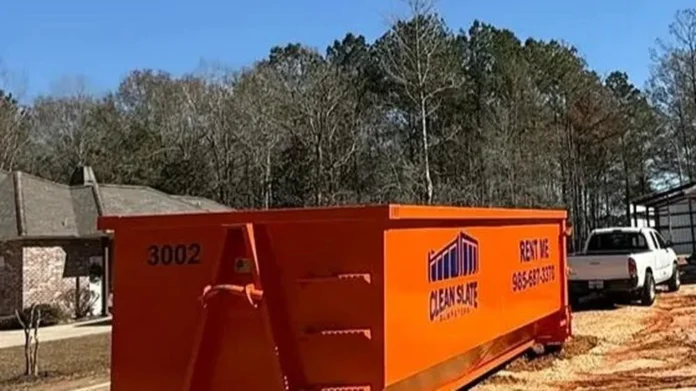

Roofers measure a roof in squares. One square is 100 square feet, a 10-by-10 patch, and every estimate for shingles, felt, and labor is built on that count.
The debris that comes off a roof has a different unit. It is weighed by the ton. The bridge between the two is the weight of a single square, and federal data puts a number on it.
What One Square of Shingles Weighs
A product profile of generic asphalt shingles from the National Institute of Standards and Technology sets the average at about 14 kilograms per square meter, or 280 pounds per square. The figure comes from a survey of published reports on laminated shingles.
The same profile says one square takes about 80 standard shingles or 65 metric shingles. It also breaks the 280 pounds down into what the shingle is made of.
The profile notes that the market had shifted from mostly 3-tab shingles toward laminated, multi-layered products, which made up more than 56 percent of the market when it was written. Its weight figure is built on those laminated products.
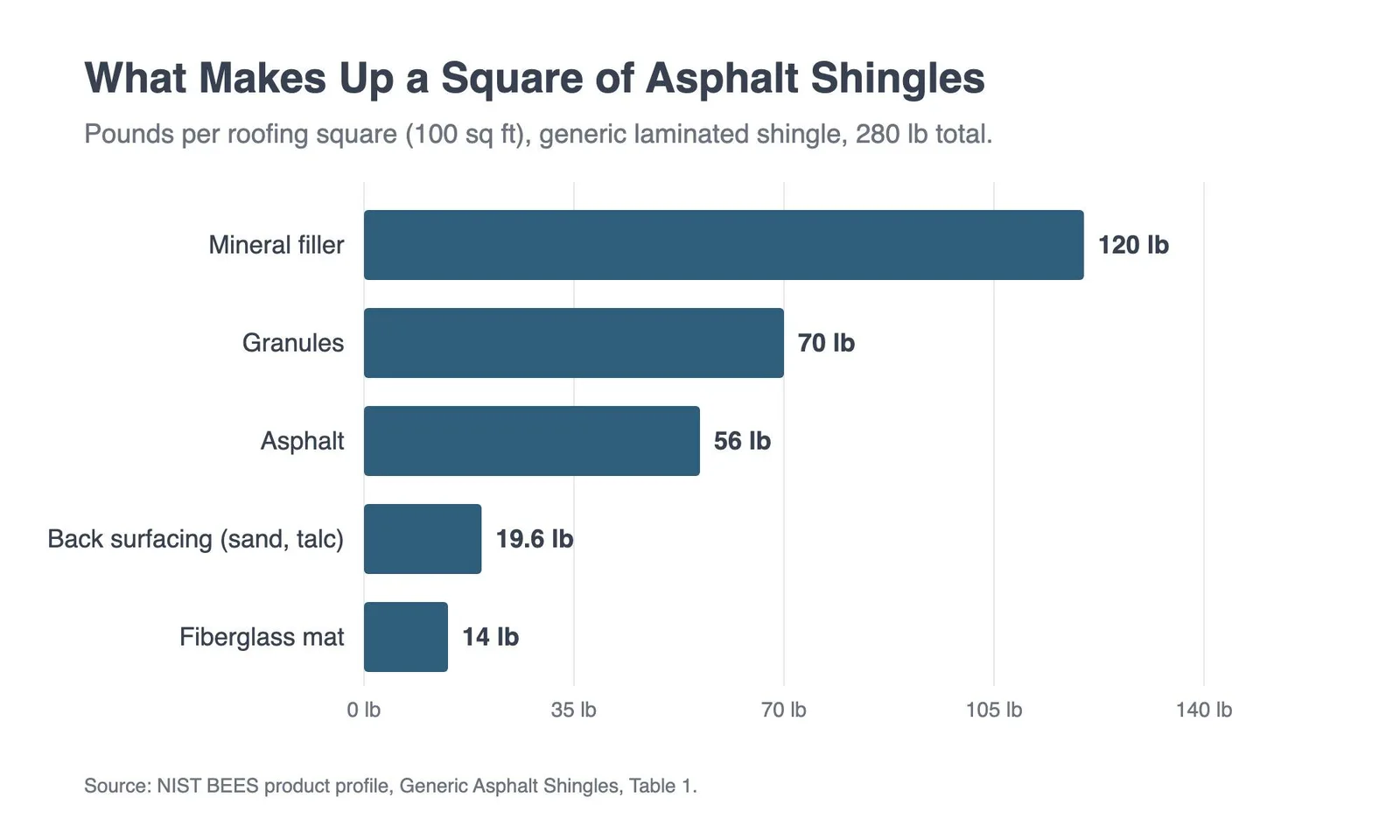
Pounds per roofing square by shingle constituent, per the NIST profile.
Mineral filler is the heaviest part, at 120 pounds per square, or 43 percent. Granules add 70 pounds and asphalt 56. The fiberglass mat that holds it together weighs only 14 pounds.
That mix explains why shingle debris is dense. Most of what comes off a roof is crushed stone and filler bound in asphalt, not air.
The Layers Under the Shingles
A tear-off removes more than shingles. The NIST profile counts Type-15 felt underlayment at 12 pounds per square and puts the nails for 80 shingles plus underlayment at 4.9 pounds.
By our arithmetic, one layer of shingles, felt, and nails comes to roughly 297 pounds per square. On a 20-square roof, the shingles alone total 5,600 pounds, or 2.8 tons. With felt and nails, the load is closer to 5,940 pounds, roughly 3 tons.
The profile’s own model assumes a second layer of shingles goes over the first after about 20 years. At 40 years, it assumes both layers and the original felt come off together.
Two layers change the math fast. By our arithmetic, a 20-square roof with two layers of shingles holds about 11,200 pounds of shingle alone, or 5.6 tons, before felt and nails are counted.
Scrap From the New Roof Adds Up Too
The old roof is not the only source of debris. NIST estimates installation scrap at about 10 percent of the installed weight, and it notes that this scrap is generally landfilled.
By our arithmetic, a new 20-square roof would leave about 560 pounds of shingle offcuts. That waste lands in the same container as the tear-off, often on the last day of the job.
A few cautions apply to all of these figures:
- The 280-pound figure is a generic average for laminated shingles, not any single product.
- The NIST profile draws on industry data from the mid-2000s, and product weights vary.
- Wet debris, decking repairs, and flashing all add weight that the profile does not count.
How Often Storms Reach Tangipahoa Parish
Weight explains how heavy a tear-off is. Weather explains how often one is needed. NOAA’s Storm Events Database logs severe weather reports by parish, including hail, thunderstorm wind, and tornadoes.
The chart below counts the database’s parish-level hail, thunderstorm wind, and tornado records for Tangipahoa Parish in each year from 2015 through 2025.
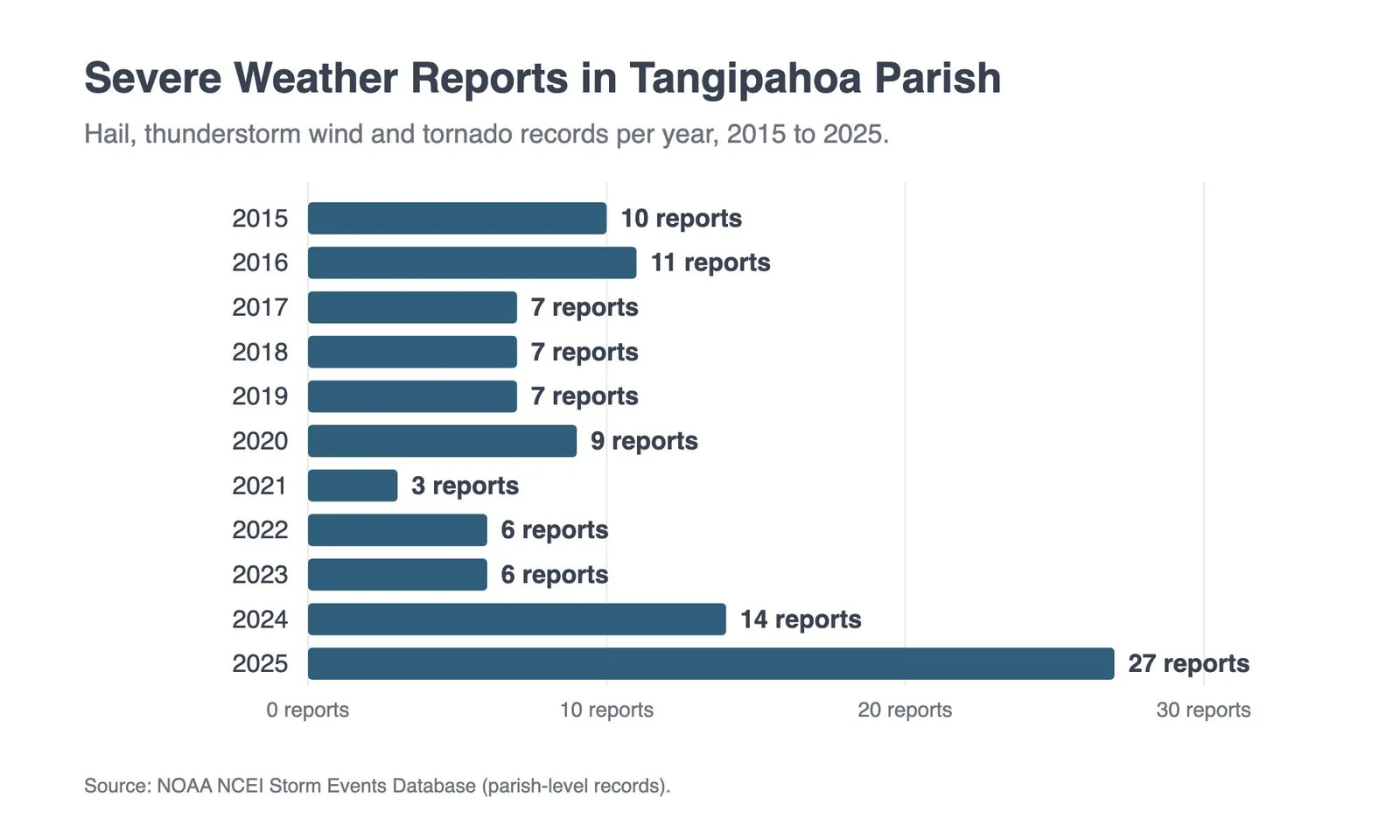
Hail, thunderstorm wind and tornado reports in Tangipahoa Parish, 2015 to 2025.
The 11 years total 107 reports, about 10 a year by our count. The last two years broke that pattern. Reports reached 14 in 2024 and 27 in 2025, the highest in the span.
March 2025 alone logged 10 thunderstorm wind reports and a tornado. October 2025 added four tornado reports. In all, 2025 carried 19 thunderstorm wind reports, five tornado reports, and three hail reports.
The 2024 total of 14 included four hail reports, tied with 2016 for the most hail reports in any year of the span.
These are reports of severe weather, not insurance claims or roof replacements. Still, they track the kind of wind and hail that sends crews up ladders across Hammond, Ponchatoula and Amite.
Hurricanes Sit Outside That Count
The chart leaves out tropical systems, which NOAA files by forecast zone, not by parish. Some of the costliest weather in the area sits in those zone records.
For Hurricane Ida on August 29, 2021, the database estimates property damage at $100 million in northern Tangipahoa and $300 million in southern Tangipahoa. That is the same year the parish logged only three hail, wind, and tornado reports.
For anyone planning a re-roof, the point is that a quiet year on the storm chart can still be a year of heavy property damage.
Turning Squares Into Tons for a Container
The square count on a roofing estimate is the starting point for sizing a dumpster. The container itself is measured in yards and tons, so the squares have to be converted first.
Clean Slate Dumpsters in Hammond lays out that conversion on its page on roofing dumpster sizing by the square in Hammond. The company says its roll-offs are not billed by the square but by container size, included tonnage and rental days. Its 15-yard includes 1 ton, the 20-yard includes 2 tons, and the 30-yard includes 4 tons.
Using the NIST weights, our arithmetic puts 2 tons at about 13 single-layer squares and 4 tons at about 27. Clean Slate’s page puts the 20-yard limit at about 12 to 16 squares of single-layer 3-tab, and it starts from the square count and shingle type.
What the Numbers Point To
The weight of a roof is predictable once the squares and layers are known. At roughly 280 pounds of shingle per square, every extra layer and every extra square shows up on the scale.
The storm record shows 2024 and 2025 as the two most active years of the span in Tangipahoa Parish. Counting squares, layers, and tons before the first shingle comes off keeps the cleanup in step with the crew.


