
Making a custom metal part today takes several kinds of expert. Someone has to model it in CAD, someone has to plan how it will be made, and someone has to run the machines. Each handoff costs time, and each person is hard to find at a remote base, a rig or a shipyard.
Solideon, a Los Angeles robotics manufacturer, wants to collapse that chain. The company already pairs standard industrial robot arms with its own software so that an operator without a robotics or engineering background can design a part and have a robot fabricate it. Now it is working on the very front of the process: the design itself.
A neighbor with the missing piece
Solideon shares its Inglewood factory floor with Zoo, a startup building agentic speech-to-CAD tools. Zoo’s software takes a spoken description and turns it into a design model. Together the two companies are developing workflows that run from spoken design intent to a manufactured part.
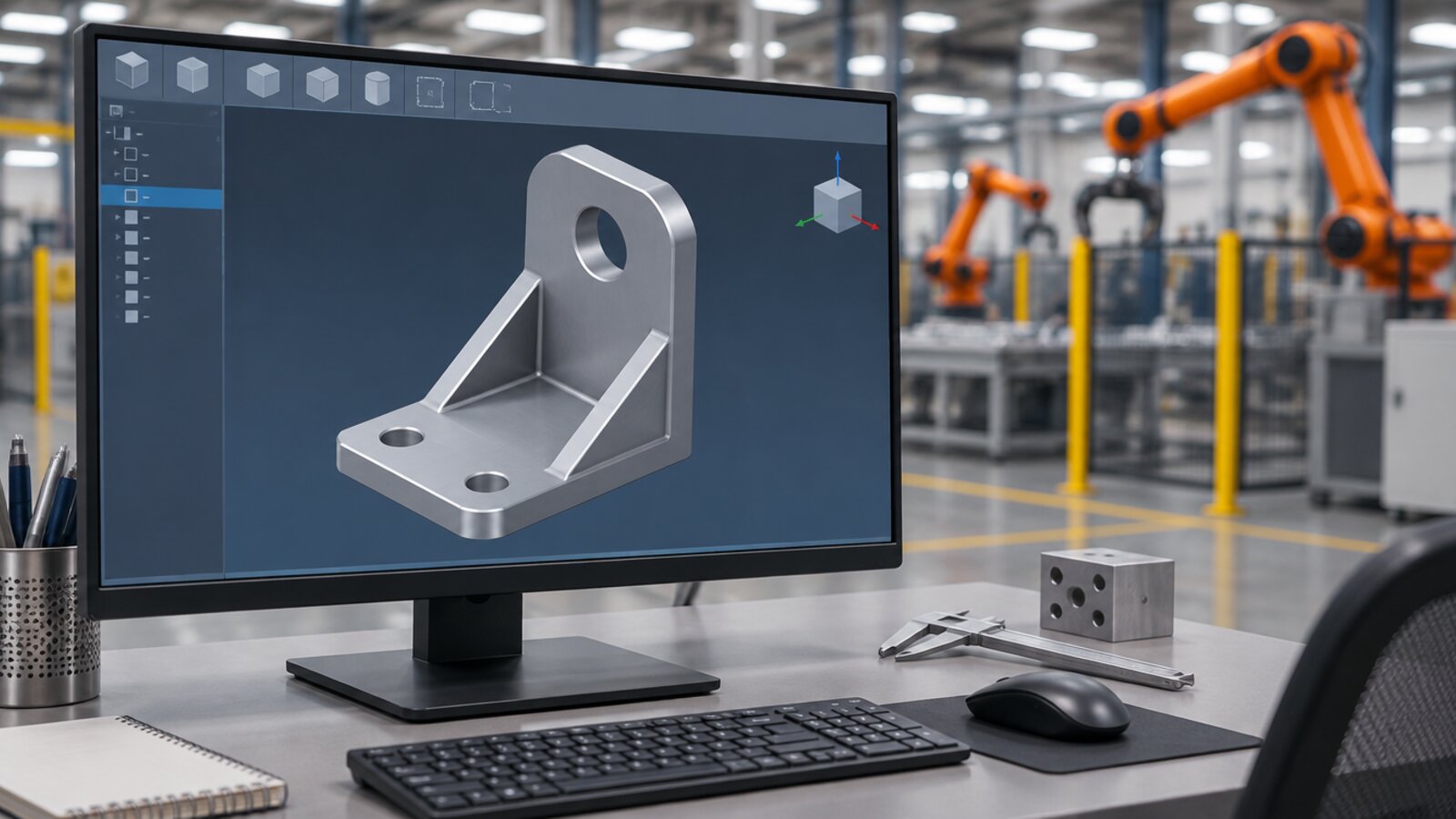
Put the pieces together and the sequence is short. A technician describes the bracket or fitting they need. The design is generated. Solideon’s software plans the build and the robots print, machine and finish the part.
Why it matters
The people who most need parts quickly are rarely CAD specialists. They are maintainers and crews who know exactly what broke and what the replacement has to do. Solideon is building for them. The company plans onboard AI that walks an operator through a build remotely, and its Air Force system is designed for personnel with no robotics or 3D printing training.
Oluseun Taiwo, Solideon’s founder and CEO, has said that adoption depends on a network of companies, not one. He sees the gap as large. Manufacturing software has moved slowly compared with the rest of technology, and many factories still run the way they did decades ago.
A long way to the end goal
Spoken-word manufacturing is early, and the parts Solideon’s deployable units make today are roughly the size of bicycle or small car components. But the direction is clear: fewer specialists between a need and a part, and more of the knowledge built into the software.
For a company whose long-term ambition reaches as far as building in space, removing the expert from every step is not a side project. It is the plan.


