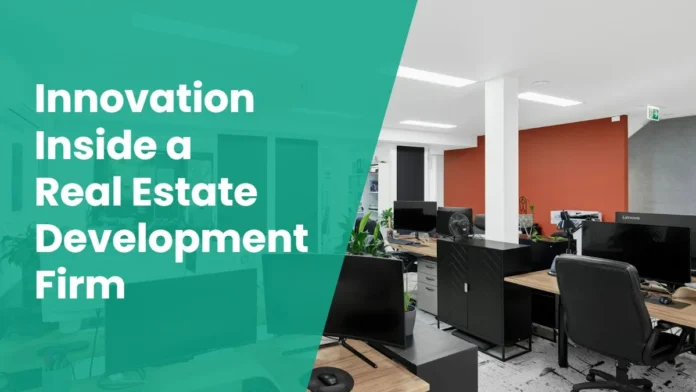

Innovation in real estate is usually associated with striking architecture, new building materials or proptech start-ups. The Urban Land Institute and PwC took a more sober view in Emerging Trends in Real Estate 2027, released on 27 October 2026 under the theme You Have to Work for It. ULI’s chief executive said the market will reward discipline, adaptability and deep local knowledge. For many development firms, the most valuable innovation may happen in the finance office rather than on site.
|
What to know
|
What the Report Emphasises
According to PwC’s press release on Emerging Trends in Real Estate 2027, the 48th edition gathered views from nearly 1,500 industry participants. PwC’s Andrew Alperstein said success will be less about making a broad sector bet and more about selecting the right asset, market and operating strategy, while ULI’s Angela Cain said the market will reward discipline, adaptability and deep local knowledge.
The report lists eight trends, from the Fiscal Reckoning to AI and the Human Premium.
Innovation Beyond the Building
Most development innovation discussions focus on design, materials and construction methods. Those matter, but many projects succeed or fail on the quality of their financial management: how quickly overruns are spotted, how efficiently lenders are paid and how clearly partners are informed.
Process innovation in these areas is less visible but often more valuable.
Replacing Spreadsheet Workflows
Many small and mid-sized developers still manage budgets, draws and consolidations in spreadsheets. Spreadsheets are flexible but fragile, with version control problems, formula errors and limited visibility for teams.
Dedicated real estate development software replaces those workflows with structured, shared data and real-time dashboards.
Cost-at-Completion as an Innovation
Calculating projected cost at completion automatically from budgets, commitments, change orders and forecasts changes how teams manage projects. Instead of discovering overruns at the end, they see problems developing early.
Elevate Solutions says its approach aims to catch overruns at around 20% completion rather than 90%.
Faster Draws, Better Cash Flow
Draw packages are a classic example of a process ripe for improvement. Elevate Solutions says a draw package built in its software takes under 30 minutes instead of six to eight hours, and its FAQ says draw preparation time is cut by more than 80%.
Time saved on draws can be spent on analysis and planning.
Discipline Through Data
Discipline, the quality ULI highlights, depends on reliable data. Developers who know their costs, commitments and cash position at all times can make disciplined decisions about acquisitions, phasing and pricing.
Without that data, discipline becomes guesswork.
Taller buildings add a further question, which is how people will move through them. elevator analysis is one way design teams test waiting times before decisions are fixed, and AdSimulo builds tools for exactly that work.
Adaptability in Practice
Adaptability means changing plans quickly when markets shift. Scenario modelling, driven by accurate project data, lets developers test the effect of slower sales, higher rates or rising costs and adjust before problems grow.
Firms with flexible systems adapt faster than those relying on static reports.
Platforms Built for the Industry
Generic accounting systems rarely handle real estate workflows such as lot tracking, takedowns, multi-entity consolidation and lender-specific draw formatting. Industry-specific platforms build these features in.
Elevate Solutions builds real estate software natively on Acumatica’s cloud ERP and says it has nearly 40 years of experience in real estate development accounting.
The Human Premium
The report’s AI and Human Premium trend says AI’s impact will be uneven and that advantage comes from measurable results and human judgement. Technology that frees experienced people from manual work lets them focus on the judgements only they can make.
That combination is where innovation pays off.
Unlimited Access Encourages Adoption
Innovation fails if people do not use new tools. Elevate Solutions offers unlimited users with no per-seat fees, which removes a common barrier to giving project managers and field teams access.
Wide adoption improves data quality across the business.
Measuring Innovation
Firms can measure process innovation through shorter month-end closes, faster draws, fewer surprise overruns and quicker reporting to partners. A controller testimonial on Elevate Solutions’ site says consolidating three systems cut month-end close time in half.
Measurable improvements build the case for further investment.
Readers who want more background can find it in Article Orbit’s article on commercial property managers outgrowing spreadsheets.
Getting Started
Developers can begin by mapping their most time-consuming processes, such as draws, consolidations and budget updates, then prioritising those with the biggest potential savings. Elevate Solutions says typical implementations take 8 to 12 weeks.
Starting small and expanding reduces risk.
What Innovation Really Looks Like Inside a Firm
For most development firms, progress is less about dramatic technology and more about removing friction. That might mean replacing manual draw packages with automated workflows, giving project managers live budget data or letting investors see reports without waiting for month end. Small improvements across many processes add up.
Firms that make progress usually start with one painful process, fix it properly and then move to the next. Trying to change everything at once tends to overwhelm teams and stall adoption.
The Takeaway
Emerging Trends 2027 says the market will reward discipline, adaptability and local knowledge. For many development firms, the most practical innovation is replacing spreadsheet workflows with integrated software that delivers real-time cost, draw and reporting data.
Which process in your development business is most overdue for reinvention?


