
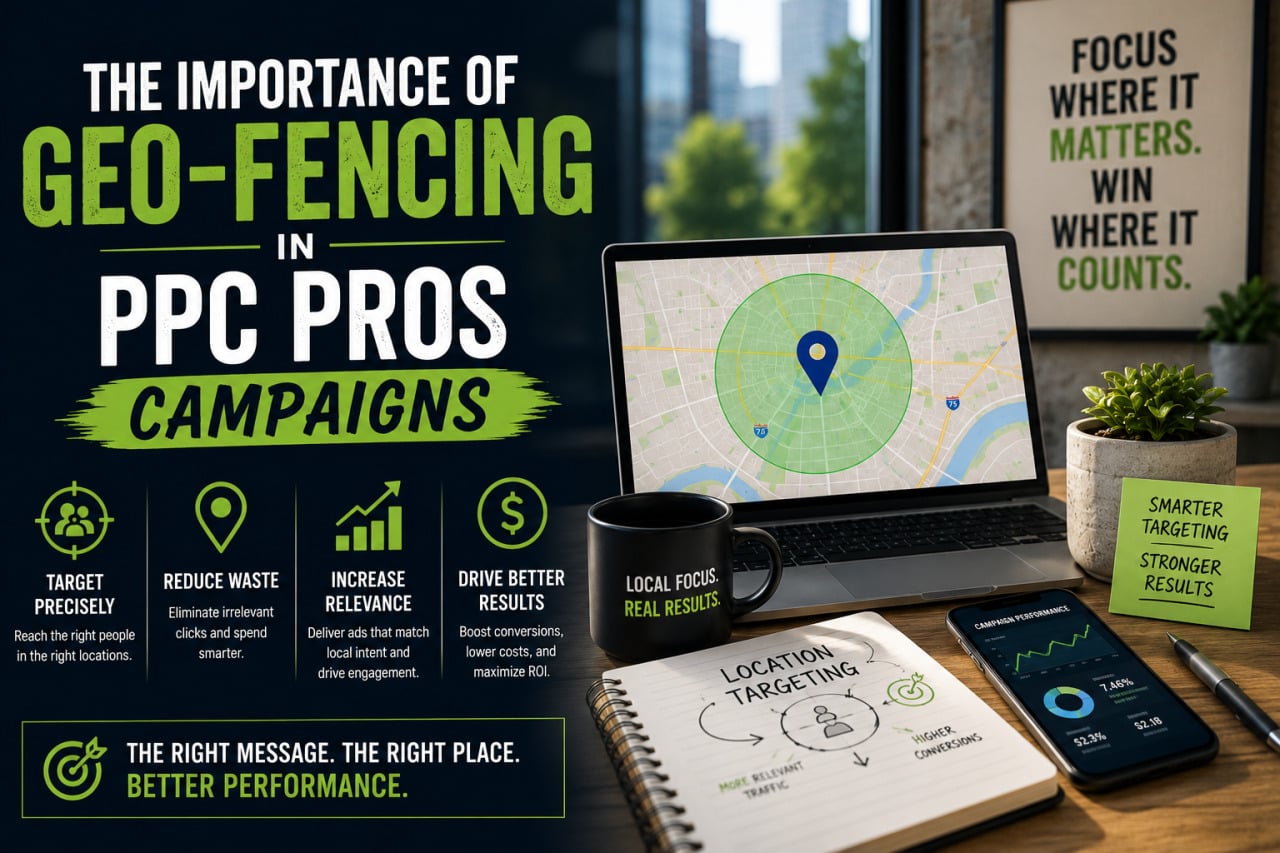
Paid advertising works best when businesses reach the right people at the right time and in the right location. For companies serving specific cities, neighborhoods, venues, or service areas, spending advertising dollars on users outside those locations can quickly reduce campaign efficiency.
Geo-fencing and precise location targeting help advertisers focus campaigns on audiences within strategically selected geographic areas. Experienced PPC Pros Google Ads specialists use location-based strategies to reduce wasted spend, improve relevance, and generate more qualified leads.
What Is Geo-Fencing?
Geo-fencing is a location-based advertising strategy that creates a virtual boundary around a specific geographic area. Advertisers can then use location signals to reach audiences associated with those targeted areas, depending on the capabilities of the advertising platform being used.
Potential target areas can include:
- Cities
- Neighborhoods
- Business districts
- Event areas
- Retail locations
- Service territories
- Specific geographic regions
The objective is simple: concentrate advertising resources on locations that matter most to the business.
Why Location Matters in PPC
Someone searching for a service isn’t necessarily a valuable prospect if they’re hundreds of miles outside the company’s service area.
Precise geographic targeting can help businesses:
- Reduce irrelevant traffic
- Improve audience relevance
- Concentrate budgets on valuable markets
- Generate more qualified inquiries
- Better align advertising with service availability
For local and regional companies, location can be one of the most important factors determining lead quality.
Reduce Wasted Advertising Spend
One of the primary reasons PPC Pros Google Ads professionals pay close attention to geographic targeting is budget efficiency.
Imagine a contractor that only serves customers within Greater Cincinnati. Paying for clicks from users located far outside that service territory could consume budget without producing viable opportunities.
Carefully configured location targeting helps direct more advertising spend toward users who can realistically become customers.
Target High-Value Service Areas
Not every location within a company’s territory performs equally.
Campaign data may reveal that certain cities, ZIP codes, or regions generate:
- Higher conversion rates
- Larger purchases
- More qualified leads
- Lower acquisition costs
- Greater customer lifetime value
Advertisers can use these insights to determine where additional budget may produce stronger returns.
Create More Relevant Ad Messaging
Location targeting can also support more personalized advertising.
For example, campaigns might use messaging tailored to specific markets, such as:
- Cincinnati Commercial Construction Services
- Buffalo Hot Tub Installation
- Miami Emergency Plumbing
- Dayton Office Renovations
When an advertisement closely reflects what the customer is searching for and where they need it, the message can feel significantly more relevant.
Support Multi-Location Businesses
Geo-targeting is particularly useful for companies operating in several markets.
Instead of running one broad campaign, advertisers can separate campaigns by:
- City
- Region
- Store location
- Service territory
- Branch office
This structure makes it easier to customize budgets, landing pages, messaging, and performance goals for each market.
Improve Local Landing Page Relevance
Geographic targeting becomes even more effective when the landing page supports the same location intent.
A strong local landing page may include:
- Relevant service information
- Geographic coverage
- Local testimonials
- Project examples
- Clear contact options
The transition from localized ad to relevant landing page creates a more consistent customer journey.
Use Geographic Exclusions
Effective location strategy isn’t only about deciding where advertisements should appear. It’s also about identifying where they shouldn’t appear.
Geographic exclusions can help prevent spending in:
- Areas outside the service territory
- Locations with consistently poor performance
- Regions the business cannot serve
- Markets assigned to another branch
Exclusions can be especially valuable when businesses operate within clearly defined service boundaries.
Analyze Performance by Location
Location-based campaign management should be driven by performance data rather than assumptions.
Important metrics include:
- Conversion rate
- Cost per conversion
- Lead quality
- Revenue
- Return on ad spend
- Conversion volume
Over time, geographic performance reports can reveal where campaigns are producing the strongest business outcomes.
Combine Location with Audience Strategy
Geography becomes even more powerful when combined with other targeting and campaign signals.
Depending on the platform and campaign type, advertisers may consider factors such as:
- Search intent
- Device
- Audience characteristics
- Time of day
- Previous website interactions
The goal is to reach valuable prospects while maintaining sufficient audience volume to generate meaningful results.
Be Careful with Overly Narrow Targeting
More precise targeting isn’t automatically better.
A geographic area that’s too small may significantly restrict campaign reach and reduce the amount of useful performance data available for optimization.
Professional PPC management requires balancing precision with scale. The appropriate geographic strategy depends on the business, market size, customer behavior, campaign objectives, and available platform controls.
Geo-Fencing vs. Google Ads Location Targeting
It’s important to distinguish traditional geo-fencing from the geographic targeting capabilities available within Google Ads.
The term geo-fencing is commonly used broadly in digital marketing, but different advertising platforms offer different location-targeting methods and levels of precision. Google Ads campaigns should therefore be configured according to the location options actually available for the relevant campaign type rather than assuming every form of traditional geo-fencing is supported.
Experienced advertisers choose the appropriate technology based on the campaign’s objectives.
FAQs
What is geo-fencing in PPC advertising?
Geo-fencing generally refers to creating defined geographic boundaries for location-based advertising. The specific targeting capabilities available depend on the advertising platform.
Can geographic targeting reduce wasted PPC spend?
Yes. Restricting campaigns to relevant service areas can help prevent advertising budgets from being spent on users in locations a business doesn’t serve.
Is geo-targeting useful for local businesses?
Absolutely. Contractors, restaurants, professional services, home service companies, retailers, and many other local businesses can benefit from geographically focused advertising.
Should advertisers target individual ZIP codes?
It can make sense in certain campaigns, but targeting should be based on business needs and reliable performance data. Extremely narrow geographic targeting can sometimes limit reach unnecessarily.
Why do PPC Pros Google Ads campaigns focus on geographic targeting?
PPC Pros Google Ads strategies can use geographic targeting to concentrate advertising resources on relevant markets, reduce wasted spend, customize local messaging, and generate leads from areas that businesses can actually serve.
Final Thoughts
Successful PPC advertising isn’t simply about generating the greatest possible number of clicks. It’s about reaching potential customers who have a realistic opportunity to become valuable leads or buyers.
For businesses with defined service territories, geographic targeting can play an important role in accomplishing that goal. By analyzing location performance, excluding irrelevant areas, tailoring messaging, and continuously adjusting campaigns, PPC Pros Google Ads strategies can help businesses use their advertising budgets more efficiently.
When location targeting is combined with strong keywords, compelling ads, relevant landing pages, and accurate conversion tracking, businesses gain a more focused PPC strategy built around reaching the customers who matter most.