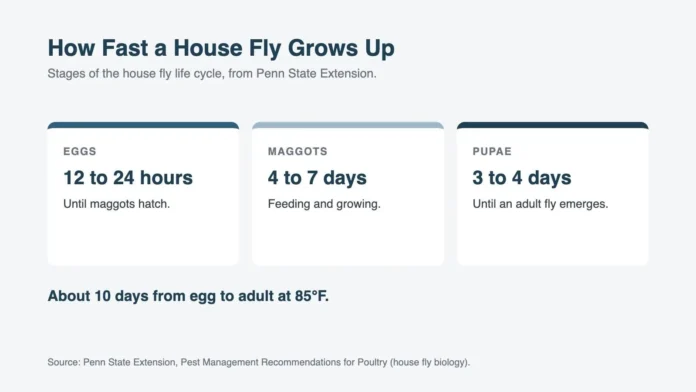

The house fly life cycle, stage by stage.
Many homeowners notice the trash can problem in July. The lid opens, the smell hits, and maggots gather along the bottom where a bag leaked a week ago.
That timing is not bad luck. It follows a predictable link between temperature and how fast flies breed, and in North Alabama the summer calendar works against anyone who rinses a can only now and then.
Garbage Is a Breeding Site
Flies do not just visit trash cans. Texas A&M AgriLife Extension’s guide to indoor flies says house flies breed in decaying organic matter such as livestock feces and garbage, and it lists poorly maintained dumpsters and garbage cans among the breeding sites to look for when flies become a problem.
The same guide notes that most house flies stay within a half mile to a mile of where they bred. A can in the garage or beside the driveway is close enough to matter.
A single fly can produce many offspring. Penn State Extension’s house fly biology says each female can lay up to six batches of 75 to 200 eggs, laid at three- to four-day intervals in cracks and crevices of the material they breed in.
Heat Sets the Clock
Temperature controls how quickly those eggs become new flies. Penn State Extension puts the full life cycle at about 45 days at 60 degrees, 21 days at 70 degrees, and 10 days at 85 degrees.
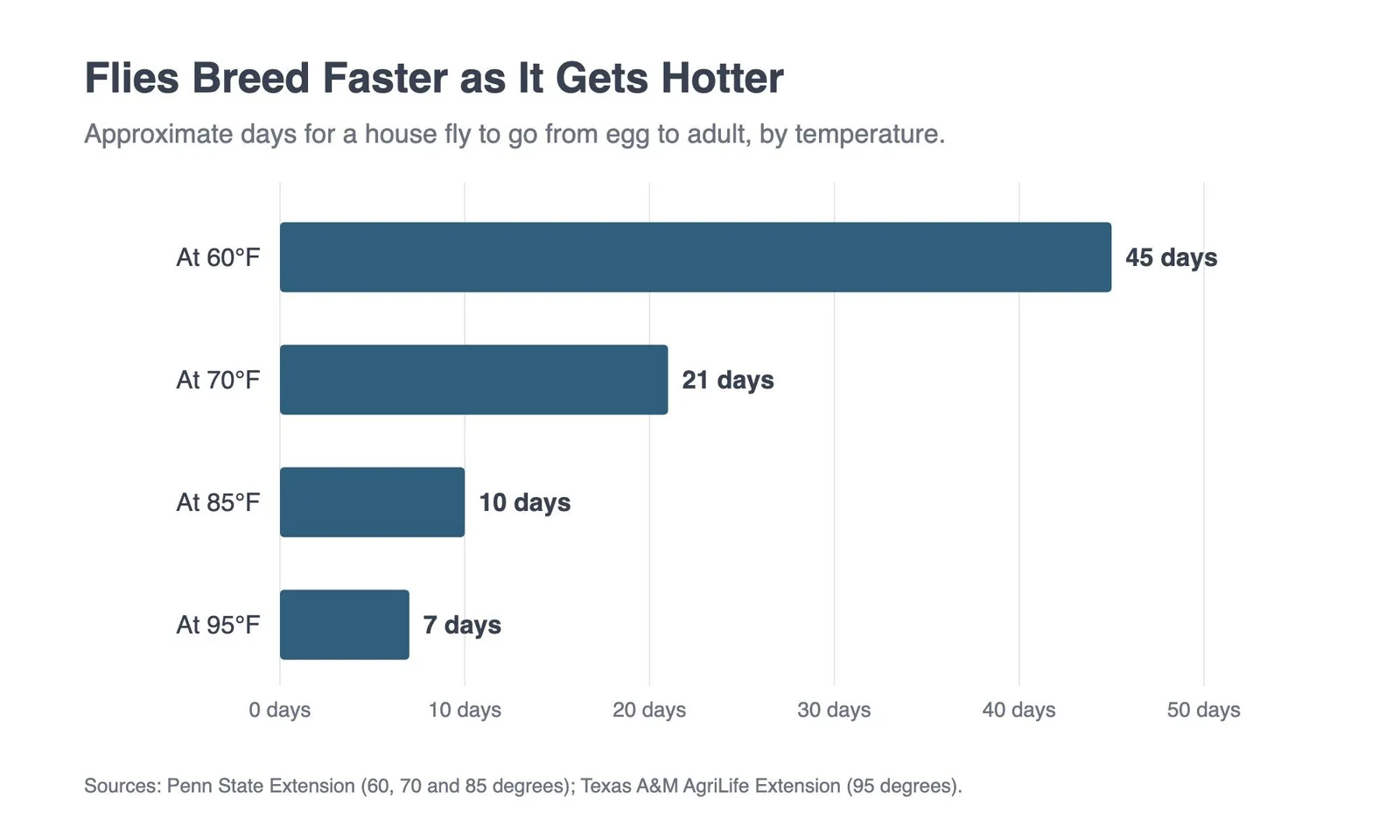
The hotter it gets, the faster flies go from egg to adult.
Texas A&M adds the top of the range. At 95 degrees, the cycle shortens to about 7 days, and house flies reproduce fastest in the summer.
At those temperatures, the stages move fast. According to Penn State, eggs hatch into maggots in 12 to 24 hours, maggots develop for 4 to 7 days, and the pupal stage lasts 3 to 4 days before an adult emerges. Generations overlap so that every stage can be present at the same time.
North Alabama Summers Are in the Fast Zone
Local weather puts much of the year in that fast range. NOAA’s 1991 to 2020 climate normals for Huntsville International Airport show a normal daily high of 89.1 degrees in June, 91.5 in July, and 91.3 in August.
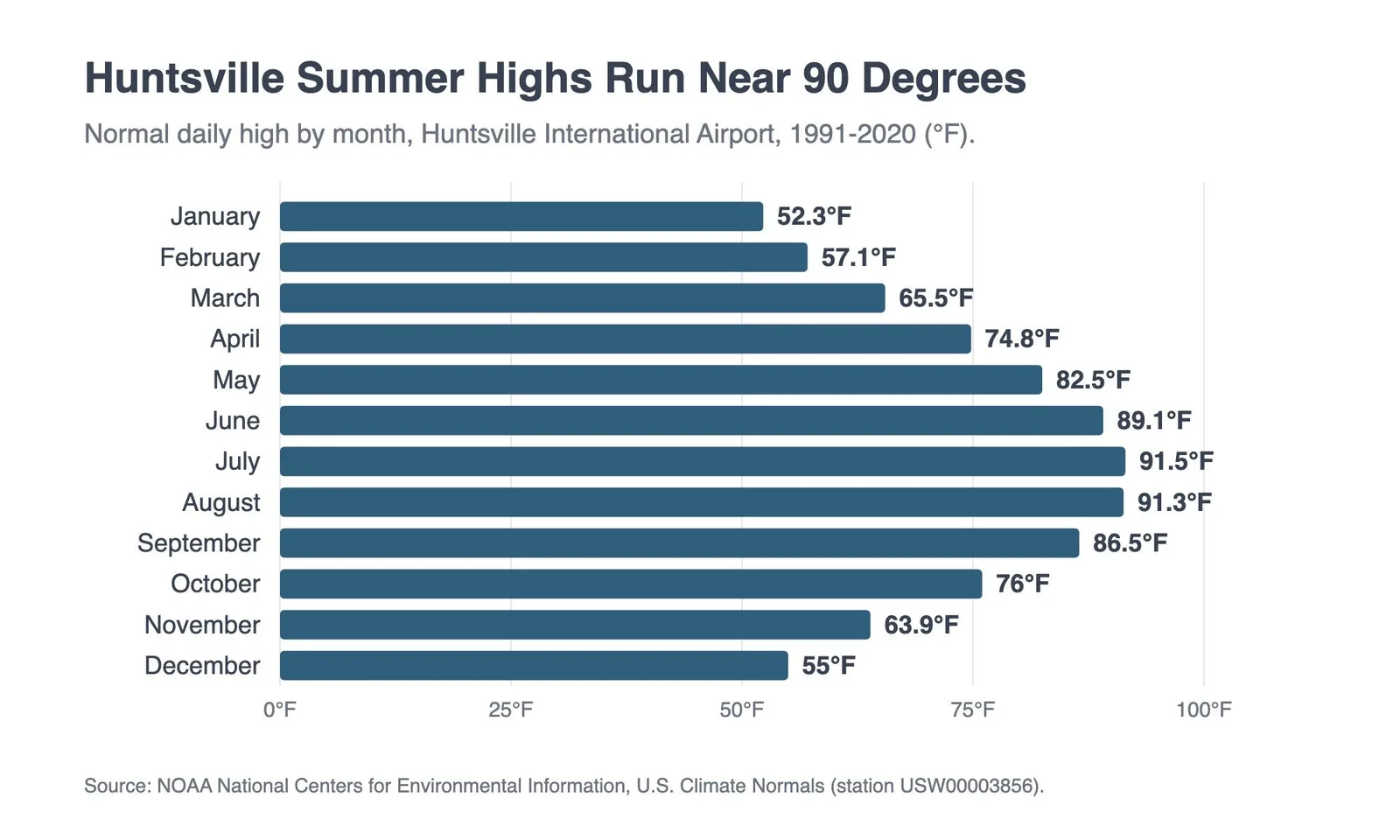
Huntsville’s normal summer highs sit right around 90 degrees.
May and September are warm too, with normal highs of 82.5 and 86.5 degrees.
Those highs line up with the shortest breeding times in the extension data. From late spring through early fall, a can that goes several weeks between cleanings can see more than one full fly generation start and finish inside it.
The Season Never Fully Shuts Off
Winter slows flies down, but it does not stop them in North Alabama. Penn State Extension says adult house flies are most active at 80 to 90 degrees and become inactive below 45 degrees.
Huntsville’s coldest month stays above that line on a typical afternoon. NOAA’s normals put January’s average daily high at 52.3 degrees, and every other month is warmer, so many winter afternoons are warm enough for flies to move around.
Texas A&M makes the same point from the other side. It says house flies are active on warm days year-round, even though they reproduce fastest in the summer.
The adults also stick around. Penn State says adult house flies live an average of three to four weeks and can live twice that long, so flies that hatch in late spring can still be around when the summer heat arrives.
What Actually Helps
The fix is mostly about removing what flies breed in. Liquid at the bottom of a can, food residue stuck to the walls, and a torn bag left in place give eggs and maggots exactly what they need.
A few habits cut that down:
- Bag food waste tightly and tie it closed before it goes in the can.
- Keep the lid shut, and replace a lid that no longer seals.
- Rinse out spills and leaks the same week they happen, not at the end of the season.
- Store the can out of direct afternoon sun when you can.
- Clean the inside of the can on a schedule during the warm months, not only when it smells.
A garden hose helps with loose debris, but it often leaves a film on the walls and a puddle at the bottom. That leftover moisture and residue is what matters to flies. The trash can is not the only source near a home, either. Texas A&M notes that household compost piles that are not properly managed can also become a source of house fly breeding.
Matching Cleaning to the Calendar
How often to clean depends on the season. When the life cycle runs about 10 days at 85 degrees, a can that goes a full season between cleanings gives flies plenty of time.
A regular schedule keeps buildup from getting started. In North Alabama, TidyCan Alabama offers monthly trash can cleaning, cleaning bins every four weeks with high-pressure hot water, curbside on trash day, across an area from the Shoals to Huntsville.
Whoever does the work, the goal is the same. The inside of the can should be clean and dry often enough that eggs have little left to develop in.
Where Trash Can Care Is Heading
North Alabama’s summers will keep bringing highs near 90 degrees, and food waste will keep ending up in household cans. The basic biology in the extension data will keep working the same way every warm season.
That makes trash can cleaning less of a chore when something smells and more of a weather-tied routine. Homes that keep their cans clean through the hot months tend to see fewer flies, fewer maggots, and fewer surprises when they lift the lid in July.


