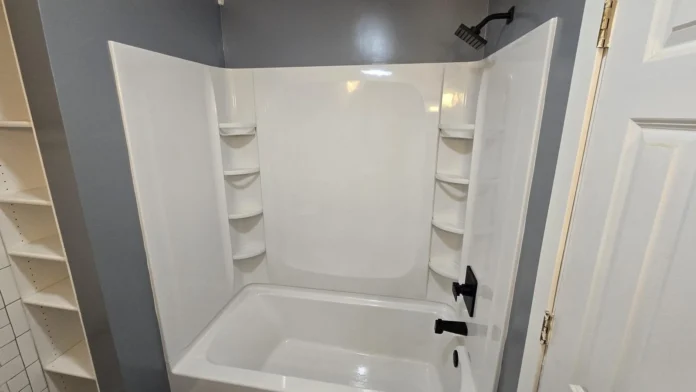

A finished tub-and-shower replacement in a West Lafayette bathroom.
Most bathroom remodels start with what a homeowner can see: a dated vanity, cracked tile, a tub that never quite drains. In an older house, the bigger decisions often sit behind the walls and under the floor, and they only show up once demolition starts.
Greater Lafayette has a lot of those houses. Planning for what an older bathroom might hide can mean the difference between a remodel that stays on budget and one that stalls halfway through.
Lafayette’s Housing Stock Skews Older
The numbers explain why this matters locally. U.S. Census Bureau estimates from the 2020 to 2024 American Community Survey put the median year built for homes in the city of Lafayette at 1971. About 20,000 of the city’s roughly 34,100 housing units were built before 1980.
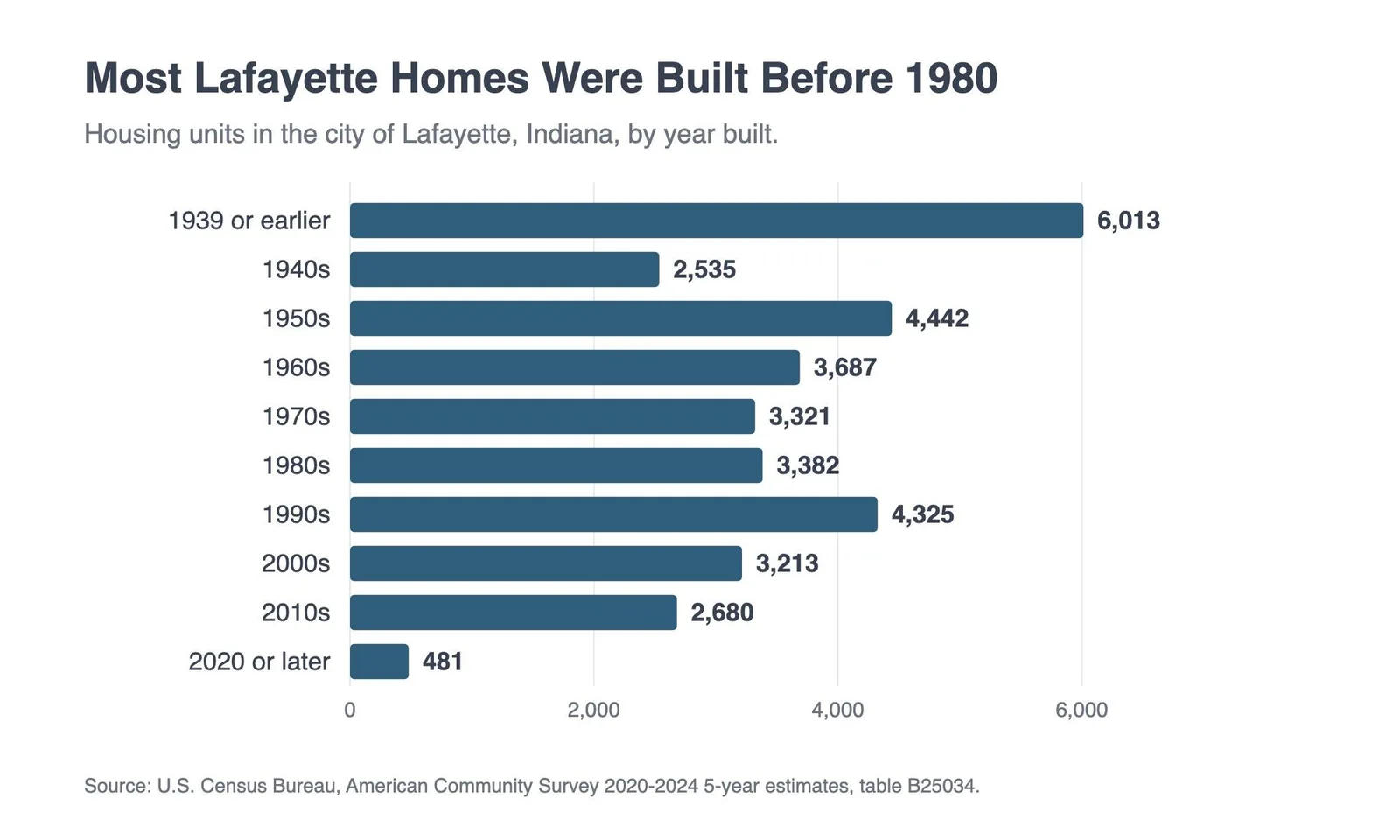
About six in ten Lafayette homes were built before 1980.
The largest single group is the oldest. The same estimates count about 6,000 Lafayette homes built in 1939 or earlier, more than any decade since. Many of those bathrooms have been updated more than once, and each update can cover up what came before.
What Opening a Wall Can Reveal
Water is a common culprit. A shower that leaks slowly for years can soak the framing and subfloor long before anything shows on the surface.
A recent West Lafayette tub and shower replacement, documented in a local remodeler’s project photos, shows how that plays out. The leaking tile shower came out to the studs; the original subfloor underneath was damaged, and the job needed new subfloor sheathing and reworked hot- and cold-supply lines before any new surfaces could go in.
None of that was visible from the bathroom door. That is common in older bathrooms, and a good estimate should explain what happens if the floor or framing turns out to be worse than expected.
Budget for the Hidden Work First
The practical response is to plan a cushion before choosing finishes. Setting aside part of the budget for repairs behind the walls keeps the tile and fixtures from becoming the first thing cut if the subfloor needs work.
It helps to ask a few direct questions during the estimate:
- What will you check once the old shower or tub comes out?
- How do you price subfloor or framing repairs if they are needed?
- Are plumbing supply and drain lines part of the scope, or extra?
- How will you handle a change if something unexpected turns up?
Clear answers to those questions say more about a contractor than a low starting number does.
Make the Big Decisions in the Right Order
The order of decisions matters as much as the decisions themselves. Moving a toilet, a shower drain, or a vanity changes where plumbing has to run, so settle the layout before anyone picks tile.
Ventilation comes next. A bathroom that holds moisture long enough to damage a subfloor needs a plan to vent steam, and that plan affects ceilings, wiring, and sometimes the attic above.
Finishes come last. Tile, lighting, mirrors, and hardware are the easiest parts to change later and the most visible parts of the room, which is exactly why they tend to crowd out the less visible decisions if they are chosen first.
Remodel for Resale or for Living?
Resale value is a fair question, but it is rarely the strongest reason to remodel a bathroom. According to the 2025 Remodeling Impact Report from the National Association of Realtors and the National Association of the Remodeling Industry, a bathroom renovation recovers an estimated 50 percent of its cost at resale. A bathroom addition recovers an estimated 56 percent.
Those figures compare remodeling cost estimates from a NARI member survey with real estate professionals’ estimates of resale value. They suggest that a bathroom remodel mostly pays off in daily use and in fixing problems like the hidden water damage above, rather than at closing.
Safety Is a Planning Issue, Not an Afterthought
The bathroom also carries real injury risk. A 2011 CDC report on bathroom injuries estimated that 234,094 nonfatal bathroom injuries among people 15 and older were treated in U.S. emergency departments in 2008. Falls caused 81.1 percent of them.
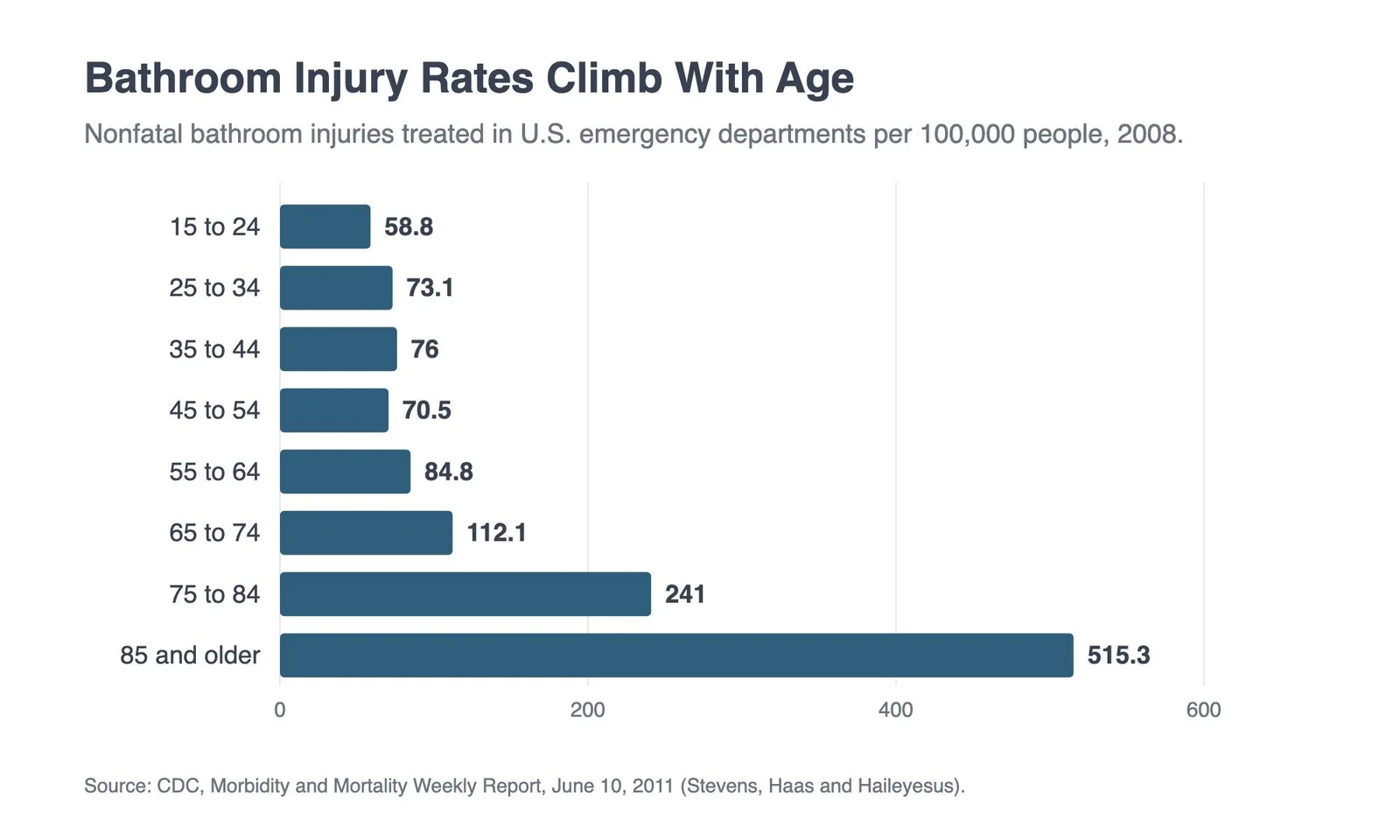
Bathroom injury rates rise sharply after age 65.
Injury rates rose with age, from 58.8 per 100,000 people aged 15 to 24 to 515.3 per 100,000 among people 85 and older. The CDC authors also found that 37.3 percent of injuries happened while bathing, showering, or getting out of the tub or shower, and noted that installing grab bars near the toilet would provide an additional measure of safety.
For a homeowner planning to stay put, that is a reason to consider grab bars, a lower shower threshold, and slip-resistant flooring during the remodel, when walls and floors are already open.
Choosing Who Does the Work
Older bathrooms reward contractors who expect surprises and say so up front. Look for someone who walks the space, asks how the room is used, and puts the scope, pricing, and timeline in writing.
In Greater Lafayette, Starling Construction is one remodeler that describes its approach to bathroom remodeling in Lafayette and Central Indiana this way: a walk-through of the bathroom, a conversation about how it is used, then a clear scope of work, pricing, and timeline before construction starts.
Where Bathroom Remodeling in Older Indiana Homes Is Heading
The housing stock will keep aging. With a median build year in the early 1970s and thousands of homes built before 1940, Lafayette will keep producing bathrooms where the real work starts below the surface.
That shifts what a good remodel looks like. Finishes still matter, but the remodels that hold up are the ones planned around the subfloor, the plumbing, and the people who will use the room for the next twenty years.


