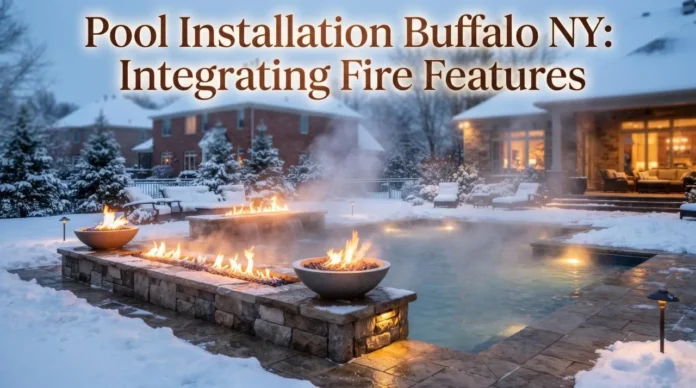

A backyard pool can transform an outdoor space into a place for relaxation, recreation, and entertaining. In Buffalo, New York, where summers provide opportunities to enjoy the outdoors but cooler evenings arrive relatively quickly, homeowners often look for ways to make their pool areas comfortable and inviting beyond the hottest part of the day. Fire features offer one way to extend the atmosphere of an outdoor living space, creating a natural gathering point near the pool while adding warmth, visual interest, and ambiance.
From modern fire bowls beside an in-ground pool to a built-in fire pit in a nearby seating area, the right design can complement the water and make the backyard feel like a coordinated outdoor retreat. However, combining fire and water requires careful planning. Placement, safety clearances, fuel supply, materials, drainage, and local regulations all influence the design.
Homeowners considering this type of project should think about the pool and fire feature as parts of one overall layout rather than separate additions. Coordinating both elements early can help avoid expensive changes and create an outdoor space that looks attractive, functions well, and remains practical to maintain.
Why Combine a Pool With a Fire Feature?
Fire features introduce a different atmosphere to a pool area. Water provides a refreshing focal point during warm weather, while fire adds warmth, movement, and a comfortable setting for relaxing after sunset.
The contrast between the two elements can also improve the visual design of the backyard. Reflecting flames, illuminated water, and carefully selected landscaping can create an inviting environment without requiring an elaborate outdoor structure.
Create a Comfortable Evening Gathering Area
A pool is often associated with swimming during the day, but the surrounding space can remain useful after swimming ends. A fire feature can encourage family members and guests to gather nearby, talk, or enjoy a quiet evening outdoors.
For example, homeowners might position a fire table in a separate lounge area with comfortable chairs, while keeping the pool deck open for movement and access. This arrangement creates two complementary spaces without requiring everyone to remain directly beside the water.
In Buffalo, where evening temperatures can fall even during summer, a fire feature may make the outdoor area more appealing on cooler nights. However, it should not be treated as a substitute for appropriate pool heating if the goal is to extend the swimming season.
Add a Strong Visual Focal Point
Fire features come in many forms, including contemporary fire bowls, linear burners, traditional fire pits, and built-in fireplaces. The best choice depends on the home’s architecture, the pool’s design, and the desired atmosphere.
A minimalist pool with clean lines may pair well with a simple linear flame feature. A more natural landscape may suit stone finishes, textured pavers, and a separate fire pit surrounded by seating.
Scale matters. A large fireplace can overwhelm a compact backyard, while a small fire bowl may feel insignificant beside a broad pool deck. Choosing the right proportions helps maintain balance between the water, hardscape, planting areas, and outdoor furniture.
Plan Fire Features During Pool Installation
The easiest time to coordinate a pool and fire feature is during the initial design phase. Integrating both into the same plan allows the contractor to consider access, utility routes, structural requirements, and safety zones before construction begins.
Homeowners researching pool installation buffalo ny services should discuss fire features before the pool layout is finalized. Even if the fire feature will be installed later, reserving space and planning utility connections early may reduce the need for future excavation or deck modifications.
Establish Separate Functional Zones
A well-designed pool area usually includes several functional zones. These may include the swimming area, circulation paths, lounging space, outdoor dining, equipment access, and landscaping.
A fire feature should fit naturally into this arrangement without interfering with the way people use the pool. Positioning a seating area beside the pool may create a convenient gathering point, but placing furniture too close to the water can restrict movement and create additional hazards.
Consider how people will move between the house, pool, seating area, and outdoor kitchen. Keep pathways clear and make sure the fire feature does not obstruct access to pool equipment, gates, emergency equipment, or required exits.
Coordinate Construction Sequences
Pool construction can involve excavation, plumbing, electrical work, foundation preparation, deck installation, and landscaping. Fire features may require additional foundations, gas lines, electrical connections, or ventilation considerations depending on their design.
Planning these activities together allows contractors to coordinate work and reduce the risk of disturbing completed surfaces. For example, if a gas-powered fire feature is planned near a future patio, the necessary utility route can be considered before the patio is installed.
Ask each contractor to clarify which parts of the project they are responsible for and how the different trades will coordinate. A clear construction plan helps prevent assumptions about who will provide connections, complete inspections, or restore disturbed landscaping.
Choosing the Right Type of Fire Feature
Different fire features serve different purposes. Some are primarily decorative, while others are designed to provide warmth for a group of people seated nearby. Choosing the right style requires considering the available space, maintenance requirements, fuel source, and local conditions.
Fire Bowls Beside the Pool
Fire bowls are often used as decorative accents around contemporary pools. Their relatively compact form can complement modern landscaping, and some models can be incorporated into raised walls or other designed features.
However, their position must be carefully evaluated. Open flames should be separated from combustible materials and positioned according to the manufacturer’s instructions and applicable requirements. The location should also account for wind, nearby trees, furniture, pool covers, and the movement of people around the deck.
Fire bowls are not automatically suitable for every poolside location. A qualified designer or installer should confirm that the specific model can be used in the proposed setting.
Built-In Fire Pits
A built-in fire pit can create a dedicated gathering space away from the pool’s main circulation area. This option may work particularly well in larger backyards where the pool, lawn, and outdoor lounge can occupy distinct zones.
Fire pits can use different fuel sources and construction materials. Some are designed for wood, while others use gas burners. The appropriate choice depends on local regulations, smoke considerations, maintenance preferences, and the intended location.
Wood-burning options may produce smoke, ash, sparks, and embers, which can create additional challenges around pool furniture, landscaping, and combustible structures. Gas models may offer more convenient operation, but they still require proper installation and safety measures.
Linear Fire Features
Linear burners can create a clean, contemporary appearance and work well alongside modern pools with geometric shapes. They may be installed in purpose-built fire tables, raised walls, or dedicated outdoor features.
Because the flame can extend across a relatively long area, the design must account for the manufacturer’s specified clearances and the expected movement of people around it.
Do not assume that a linear burner can be installed in an ordinary wall or countertop. The enclosure, materials, ventilation, drainage, and burner assembly must be designed for the specific product.
Outdoor Fireplaces
An outdoor fireplace can create a more substantial focal point and define a lounge area. It may be suitable for a spacious backyard where homeowners want a more architectural outdoor living environment.
Fireplaces generally require more planning than portable fire tables or simple decorative bowls. Their foundations, construction materials, chimney or venting arrangements, and clearances must be appropriate for the selected design and fuel source.
The added structure should also complement the house and pool rather than compete with them visually.
Selecting a Fuel Source for Buffalo’s Climate
Fuel selection affects convenience, installation requirements, operating costs, and maintenance. Common options include natural gas, propane, and wood, although availability and suitability depend on the specific product and site.
Natural Gas
A natural gas fire feature can be convenient for homeowners whose property already has a suitable gas supply. Depending on the design, the feature may be operated through a manual control or an approved ignition system.
Installation requires appropriate gas piping, pressure calculations, connections, and inspections. The distance from the existing gas supply and the capacity of the system can affect cost.
Never assume that an existing gas line can support an additional appliance without assessment. A qualified professional should determine whether the supply is adequate and install the system according to applicable requirements.
Propane
Propane may be appropriate when extending a natural gas line is impractical or when the homeowner prefers a self-contained fuel arrangement. Some fire tables and bowls use replaceable cylinders, while other systems may require a larger supply arrangement.
Cylinder storage and placement are important safety considerations. Follow the manufacturer’s instructions and applicable rules regarding clearances, ventilation, and storage. Propane containers should never be placed in an enclosed area unless the specific installation is designed and approved for that use.
Ask how often the fuel supply will need to be replenished and whether the arrangement is practical for the expected frequency of use.
Wood-Burning Features
Wood-burning fire pits offer a traditional campfire atmosphere, but they require more cleanup and attention. Smoke direction, sparks, ash disposal, and the storage of dry firewood all need consideration.
In a pool setting, ash and debris can make their way into the water or onto surrounding surfaces. Wind can also carry embers toward landscaping, furniture, fences, or buildings.
Before choosing a wood-burning feature, verify local restrictions and determine whether the location provides sufficient separation from combustible materials. A gas feature may be more suitable for homeowners who prioritize convenience and easier day-to-day control.
Safety Clearances and Poolside Placement
Fire and water can coexist in an outdoor design, but they introduce different hazards that must be addressed. A safe layout should consider the flame, heat, fuel system, pool access, and the behavior of people using the space.
Keep the Flame Away From Combustible Materials
Decking, furniture, umbrellas, shade structures, trees, and decorative plants may be vulnerable to heat or sparks. The required separation depends on the fire feature, its fuel source, and the manufacturer’s installation instructions.
Do not rely on visual estimates to determine safe placement. Review the product documentation and consult the installer about clearances from walls, railings, overhead structures, and other materials.
Wind should also be considered. A location that appears safe on a calm day may expose nearby furniture or vegetation to flame or heat under different conditions.
Maintain Clear Pool Access
The pool deck should remain easy to navigate. Fire features, furniture, decorative walls, and planters should not obstruct paths to gates, ladders, steps, or emergency equipment.
If children will use the backyard, think carefully about how the design separates the swimming area from the fire feature. A barrier or change in layout may help create a clearer distinction between the two zones, but it should not replace active supervision or required pool barriers.
Consider Slip and Trip Hazards
Water splashes, wet feet, and evening lighting can increase the risk of slips around the pool. Fuel lines, electrical conduits, raised edges, and decorative features should be arranged so they do not create unexpected obstacles.
Choose appropriate surfaces and make sure the transition between the pool deck and fire lounge is easy to navigate. If the feature is located away from the house, provide suitable lighting along the path.
Choosing Materials That Withstand Western New York Weather
Buffalo’s climate presents particular challenges for outdoor construction. Freeze-thaw cycles, winter moisture, snow, and changing temperatures can affect concrete, stone, metal, masonry, and other materials.
Selecting suitable materials can help protect the appearance and function of the fire feature over time.
Use Materials Rated for the Application
Not every stone, brick, tile, or concrete product is suitable for direct exposure to high heat. A material may perform well as ordinary paving but crack, discolor, or deteriorate when exposed to temperatures beyond its intended range.
Ask the designer to specify materials that are appropriate for the fire feature’s temperature and installation method. The burner enclosure, surrounding finish, and supporting structure should be compatible with the manufacturer’s requirements.
Account for Water and Drainage
Rainwater, melted snow, and pool splash can affect outdoor fire features. Some models require specific drainage arrangements to prevent water from accumulating around the burner or inside the enclosure.
Poor drainage can also affect nearby foundations and paved surfaces. Plan grading so water moves away from the pool equipment, house, and fire feature as intended.
Where winter conditions are severe, confirm which components need to be covered, disconnected, drained, or otherwise protected before freezing temperatures arrive.
Protect Metal Components
Metal finishes and burner components may be exposed to moisture, pool chemicals, and outdoor weather. Salt, cleaning products, and certain chemical residues can contribute to corrosion depending on the material.
Follow the manufacturer’s cleaning and maintenance instructions, and avoid applying unapproved coatings or chemicals. If the feature is near the pool, ask whether the materials are appropriate for the expected exposure to chlorinated water or other pool treatment systems.
Lighting and Landscaping Around the Fire Feature
Lighting and landscaping help connect the pool and fire feature into one cohesive outdoor environment. They also influence how comfortable and safe the space feels after dark.
Combine Lighting With the Natural Glow of Fire
Fire provides a focal point, but it should not be the only source of illumination. Low-level path lighting, suitable deck lighting, and carefully positioned fixtures can make it easier to navigate the area without overwhelming the atmosphere.
Lighting near water must be selected and installed according to applicable electrical safety requirements. Pool-related electrical systems may require specific equipment, bonding, grounding, and protection measures.
A qualified electrician should coordinate the lighting plan with the pool and fire feature installations, particularly when multiple outdoor systems are being added at once.
Choose Landscaping Carefully
Planting can soften the hard edges of a pool deck and create a natural transition to the fire lounge. However, plant selection and placement should account for heat exposure, dry conditions near flames, root growth, and seasonal maintenance.
Avoid placing flammable plants too close to open flames. Consider how mature shrubs and trees will affect airflow, access, and sightlines over time.
For Buffalo properties, prioritize plants suited to the local climate and position them where snow storage and winter maintenance will not damage the landscape.
How Fire Features Affect the Project Budget
The cost of integrating a fire feature depends on its type, size, materials, fuel source, installation requirements, and relationship to the rest of the outdoor space.
A simple manufactured fire table may involve a different scope of work from a custom masonry fireplace with a dedicated foundation, gas line, seating wall, and coordinated lighting.
Main Cost Factors
When developing the budget, consider the following components:
- Fire feature itself: The cost of the unit, burner, controls, and accessories.
- Foundation and hardscape: Concrete pads, masonry, pavers, retaining walls, or other supporting surfaces.
- Fuel supply: Gas piping, propane arrangements, regulators, and required connections.
- Electrical work: Ignition systems, lighting, and any required outdoor electrical components.
- Design and installation: Planning, labor, coordination, and any specialized construction.
- Permits and inspections: Fees and approvals that apply to the specific project.
- Landscaping and seating: Plants, furniture, walkways, and other finishing elements.
- Maintenance and winter protection: Covers, cleaning supplies, inspections, and seasonal preparation.
These categories should be considered alongside the pool budget, not added as an afterthought. A coordinated plan makes it easier to determine whether the preferred feature fits the overall project.
Avoid Comparing Prices Without Comparing Scope
Two proposals may appear similar while covering different work. One may include the fire feature and its installation but exclude the fuel connection, while another may include the complete system.
Ask contractors to itemize their proposals and identify exclusions. Confirm who is responsible for permits, inspections, utility connections, and final testing.
It is also worth setting aside funds for unexpected site conditions. If excavation reveals unsuitable soil or existing utilities interfere with the planned layout, additional work may be necessary.
Maintenance and Seasonal Preparation
A fire feature needs routine care to remain safe and attractive. The exact requirements depend on the fuel source, materials, and product design.
Inspect the System Regularly
Before using a gas-powered feature, follow the manufacturer’s inspection and operating instructions. Look for visible damage, corrosion, blocked burner openings, loose components, or other signs that service may be needed.
If you notice a gas odor, stop using the feature, avoid ignition sources, and follow the appropriate gas emergency procedures. Have a qualified professional inspect the system before returning it to service.
Wood-burning features require regular removal of ash and debris, along with inspection for damage caused by heat or weather.
Prepare for Winter
Before freezing weather arrives, follow the manufacturer’s seasonal shutdown procedure. Depending on the product, this may involve shutting off the fuel supply, protecting exposed components, removing certain accessories, and using a suitable cover.
Do not cover a fire feature while it is hot or operate it under a cover unless the product is specifically designed for that use. Covers should not trap moisture in a way that damages sensitive components.
If the feature uses a permanent gas line, ask the installer whether any seasonal service is recommended. Keep the surrounding area free of accumulated leaves, branches, and other combustible debris throughout the year.
Frequently Asked Questions
Can a fire feature be installed directly beside a swimming pool?
It may be possible, but the suitability depends on the specific product, clearances, fuel source, surrounding materials, and applicable safety requirements. A designer or installer should confirm the proposed location before construction begins. In some backyards, a separate seating area a short distance from the pool provides a more practical arrangement.
Which fire feature is best for a pool area?
There is no single best option for every property. Fire bowls may suit modern pool designs, fire pits can create a casual gathering area, linear burners can complement contemporary landscaping, and outdoor fireplaces can provide a larger architectural focal point. Space, fuel availability, maintenance preferences, and safety requirements should guide the decision.
Is natural gas better than propane for an outdoor fire feature?
Natural gas can be convenient when a suitable supply is available, while propane may work where extending a gas line is impractical. Both options require proper installation and adherence to the manufacturer’s instructions. The best choice depends on site conditions, fuel availability, operating preferences, and installation costs.
Can I add a fire feature to an existing pool?
Yes, in many cases, but the project needs to account for existing utilities, pool equipment, deck construction, drainage, and available space. Installing the feature may require additional excavation or modifications to the hardscape. A site assessment can help determine the most practical location and identify potential complications.
Do fire features need special winter protection in Buffalo?
Many outdoor fire features need seasonal preparation because freezing temperatures, snow, and moisture can damage certain components. Follow the manufacturer’s instructions for shutdown, cleaning, covering, and fuel-system care. The required steps vary by product, so avoid assuming that one winterization method works for every model.
Will a fire feature make my pool usable throughout the year?
A fire feature can make the surrounding seating area more comfortable during cooler evenings, but it does not necessarily heat the pool water. Extending the swimming season requires a separate evaluation of pool heating, covers, energy use, and weather conditions.
Conclusion
Integrating a fire feature into a pool design can create a more inviting outdoor living space, especially for homeowners who enjoy entertaining and relaxing after sunset. In Buffalo, careful planning is particularly important because seasonal weather, freeze-thaw cycles, and winter preparation affect the long-term performance of outdoor construction.
The most successful projects coordinate the pool, fire feature, seating, lighting, landscaping, and utilities from the beginning. Choosing the right type of feature, confirming clearances, selecting suitable materials, and arranging professional installation can help reduce avoidable problems.
Before committing to a design, review the intended use of the space, the needs of your household, the available budget, and the ongoing maintenance involved. With a coordinated approach, a pool and fire feature can complement one another and create a backyard environment that feels comfortable, functional, and visually cohesive throughout the outdoor season.


