
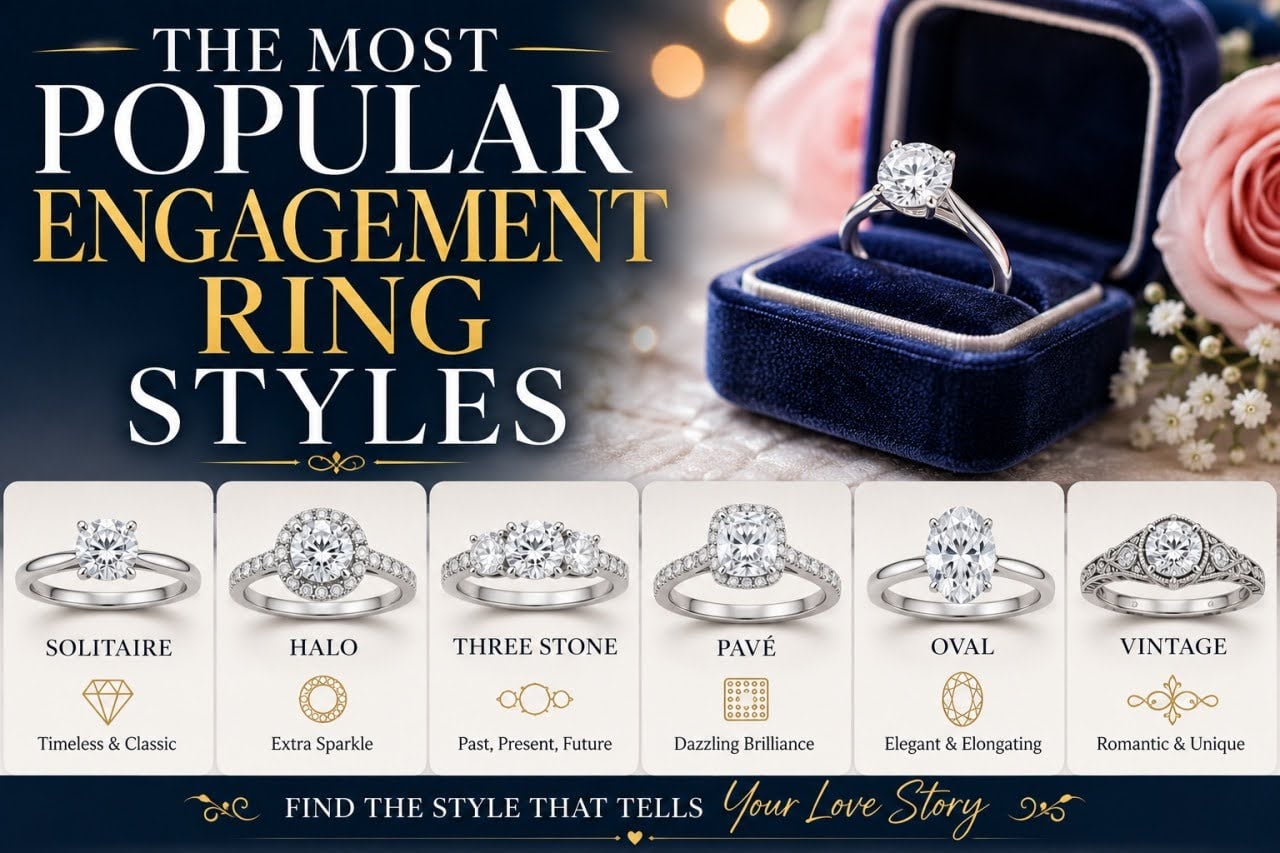
Choosing an engagement ring is about much more than selecting a beautiful stone. The setting, band, shape, metal, and overall design all contribute to how the finished ring looks and feels on the hand.
With so many engagement ring styles available, couples can choose everything from timeless solitaires to elaborate vintage-inspired designs. Understanding the most popular options can make it easier to narrow down your preferences and find a ring that feels personal rather than simply following a trend.
Whether you’re shopping together or planning a surprise proposal, here are the engagement ring styles worth knowing.
Classic Solitaire Engagement Rings
The solitaire remains one of the most recognizable engagement ring designs.
A solitaire typically features a single center stone without additional gemstones competing for attention. Its simplicity puts the focus directly on the diamond or gemstone.
Solitaire rings are popular because they are:
- Timeless
- Versatile
- Easy to pair with wedding bands
- Available in numerous stone shapes
- Suitable for many personal styles
For someone who appreciates understated elegance, a solitaire can be difficult to beat.
Hidden Halo Engagement Rings
A hidden halo provides additional sparkle without dramatically changing the ring’s appearance from above.
Instead of surrounding the center stone at the same level, smaller diamonds are positioned beneath it.
From the top, the ring may resemble a solitaire. From the side, the hidden diamonds create an unexpected detail.
Hidden halos have become particularly popular with buyers who want a modern ring with subtle additional brilliance.
Traditional Halo Engagement Rings
A traditional halo surrounds the center gemstone with smaller accent stones.
This design can make the center stone appear more prominent while adding substantial sparkle to the ring.
Halo settings can complement many center-stone shapes, including:
- Round
- Oval
- Cushion
- Pear
- Princess
They’re an excellent option for someone who prefers a glamorous appearance.
Three-Stone Engagement Rings
Three-stone engagement rings feature a center gemstone accompanied by two side stones.
Many couples associate the three stones with the past, present, and future of a relationship, although buyers can give the design any meaning they choose.
Side stones can match the center stone’s shape or create contrast.
Popular combinations include:
- Round center with round sides
- Oval center with pear-shaped sides
- Emerald center with tapered baguettes
The result can feel both substantial and sophisticated.
Pavé Engagement Rings
Pavé settings incorporate small diamonds or gemstones along the band, creating a continuous sparkling effect.
A pavé band can make even a simple center-stone setting feel more elaborate.
Buyers may choose:
- Full pavé
- Half pavé
- Micro-pavé
- Pavé combined with a halo
Because the small stones and setting details can require additional care, it’s worth discussing maintenance with your jeweler.
Oval-Cut Engagement Rings
Oval diamonds have become a major presence in contemporary engagement jewelry.
Their elongated shape can create an elegant appearance while providing plenty of visual presence on the finger.
Oval stones work beautifully in:
- Solitaires
- Hidden halos
- Traditional halos
- Pavé settings
- Three-stone rings
They’re especially appealing to someone who wants a classic diamond look with a slightly more distinctive silhouette.
Round Brilliant Engagement Rings
The round brilliant remains a classic choice.
Its symmetrical shape works with almost every setting style, from understated solitaires to elaborate diamond halos.
Round stones are popular for their brilliance and versatility.
A round center can also make future wedding-band selection relatively straightforward because it complements such a broad variety of designs.
Emerald-Cut Engagement Rings
Emerald-cut gemstones create a very different appearance from brilliant-cut stones.
Rather than emphasizing intense sparkle, their step-cut facets produce broad flashes of light and a distinctive geometric look.
Emerald-cut rings often appeal to buyers who appreciate:
- Clean lines
- Art Deco influences
- Understated luxury
- Elongated shapes
- Sophisticated design
A simple solitaire or setting with tapered side stones can highlight the emerald cut particularly well.
Cushion-Cut Engagement Rings
Cushion cuts combine a generally square or rectangular outline with softened corners.
The shape has a romantic quality and works well in both modern and vintage-inspired settings.
Cushion stones are frequently paired with:
- Halos
- Pavé bands
- Solitaires
- Three-stone settings
Different cushion cuts can have noticeably different appearances, so comparing stones in person can be helpful.
Pear-Shaped Engagement Rings
Pear-shaped stones combine characteristics of round and marquise shapes, creating a distinctive teardrop silhouette.
They can look elegant in a minimalist solitaire or highly dramatic when surrounded by a halo.
The pointed end also creates opportunities for different orientations and wedding-band combinations.
Pear-shaped rings are ideal for someone who wants something recognizable but less conventional than a round center stone.
Marquise Engagement Rings
The marquise cut has an elongated shape with pointed ends.
Its distinctive silhouette creates significant visual presence and can make the gemstone appear particularly prominent on the hand.
Marquise stones work with:
- Solitaire settings
- Hidden halos
- Pavé bands
- Vintage-inspired designs
The shape has historical roots but can look remarkably contemporary in a minimalist setting.
Radiant-Cut Engagement Rings
Radiant cuts combine an angular outline with brilliant-style faceting.
This makes them appealing to buyers who like rectangular or square shapes but still want significant sparkle.
Radiant-cut stones can look especially striking in:
- Solitaires
- Hidden halos
- Three-stone settings
- Pavé bands
Their combination of structure and brilliance makes them a versatile contemporary choice.
Princess-Cut Engagement Rings
Princess-cut diamonds typically feature a square shape with sharp corners and brilliant faceting.
They provide a geometric alternative to the traditional round diamond while maintaining plenty of sparkle.
Princess cuts can work well for buyers who prefer clean, modern lines.
Because the corners can be vulnerable, choosing a setting that provides appropriate protection is important.
Bezel-Set Engagement Rings
Bezel settings surround all or part of the gemstone’s perimeter with metal.
This creates a sleek, contemporary appearance while providing additional protection around the stone.
Bezel settings are particularly appealing for people with active lifestyles or those who don’t want prominent prongs catching on clothing.
Modern bezel-set engagement ring styles can feel minimalist without being visually plain.
Vintage-Inspired Engagement Rings
Vintage-inspired designs incorporate details associated with jewelry from earlier periods.
These may include:
- Milgrain
- Engraving
- Filigree
- Geometric patterns
- Decorative side stones
- Intricate metalwork
Some rings draw inspiration from Victorian or Edwardian jewelry, while others incorporate Art Deco geometry.
These styles are ideal for someone who values intricate details and a sense of history.
Minimalist Engagement Rings
Not everyone wants a highly elaborate ring.
Minimalist engagement rings focus on clean proportions and restrained design.
They may feature:
- Thin bands
- Simple prongs
- Solitaire stones
- Bezel settings
- Minimal accent diamonds
The simplicity allows the gemstone and craftsmanship to become the main focus.
Two-Tone Engagement Rings
Why choose one metal when you can combine two?
Two-tone engagement rings can use different metals for the band and setting.
For example, a ring might combine:
- Yellow gold and white gold
- Yellow gold and platinum
- Rose gold and white gold
This approach can create visual contrast while making the ring easier to coordinate with other jewelry.
Yellow Gold Engagement Rings
Yellow gold has returned strongly to contemporary engagement jewelry.
Its warm color can complement both traditional and modern settings.
Yellow gold looks particularly attractive with:
- Solitaires
- Emerald cuts
- Oval stones
- Vintage-inspired designs
- Bezel settings
For buyers who want warmth and a timeless jewelry aesthetic, yellow gold remains an excellent option.
White Gold Engagement Rings
White gold provides a bright, neutral appearance that pairs naturally with colorless or near-colorless diamonds.
It can complement almost any ring style, making it one of the most versatile metal choices.
White gold does require appropriate long-term care, and some pieces may periodically need professional maintenance to preserve their intended appearance.
Platinum Engagement Rings
Platinum is valued for its naturally white appearance and durability.
It is commonly used for:
- Engagement rings
- Wedding bands
- Fine jewelry
Platinum can be particularly appealing for buyers who want a premium white metal without relying on surface plating for its color.
Its density and characteristics differ from gold, so comparing both options with a jeweler can help determine your preference.
Rose Gold Engagement Rings
Rose gold offers a warmer, pink-toned appearance created through its alloy composition.
It pairs beautifully with:
- Vintage-inspired settings
- Oval stones
- Cushion cuts
- Morganite
- Diamonds
Rose gold can be a good option for someone who wants a ring that feels romantic and slightly different from traditional white or yellow metals.
Colored Gemstone Engagement Rings
Diamonds aren’t the only choice for engagement rings.
Colored gemstones can create a highly personal design.
Popular options may include:
- Sapphire
- Ruby
- Emerald
- Moissanite
- Other gemstones suitable for the intended wear
Gemstones vary substantially in hardness, durability, and care requirements, so discuss everyday wear with an experienced jeweler before making your choice.
Lab-Grown Diamond Engagement Rings
Lab-grown diamonds have expanded the options available to engagement ring shoppers.
They have essentially the same fundamental chemical composition and crystal structure as natural diamonds but are produced in controlled laboratory environments.
Some buyers choose lab-grown diamonds because they may allow greater flexibility regarding:
- Stone size
- Cut
- Setting
- Overall budget
Natural and lab-grown diamonds have different market considerations, so shoppers should understand exactly what they’re purchasing.
Moissanite Engagement Rings
Moissanite has also become a popular center-stone option.
It is a distinct gemstone rather than a type of diamond and is known for strong brilliance, colorful fire, and durability.
Moissanite can appeal to buyers who want:
- Significant visual presence
- Strong sparkle
- Everyday durability
- Greater budget flexibility
Seeing moissanite and diamonds side by side can help determine which appearance you prefer.
Custom Engagement Rings
Sometimes the perfect ring doesn’t exist in a display case.
A custom design allows buyers to combine specific elements into one piece.
You might choose:
- A particular center stone
- Custom side stones
- A unique setting
- Personalized engraving
- A specific metal
- An unusual band design
Custom jewelry can be particularly meaningful when the wearer has a clear personal style.
How to Choose Between Engagement Ring Styles
With so many options, start with the person who will actually wear the ring.
Consider:
- Personal jewelry style
- Lifestyle
- Preferred metal
- Desired stone shape
- Amount of sparkle
- Maintenance preferences
- Budget
Someone who works frequently with their hands may have different priorities from someone who loves elaborate jewelry.
Consider the Wedding Band Early
The engagement ring and wedding band will often be worn together, so it’s worth thinking about both pieces before purchasing.
Certain settings allow a traditional straight wedding band to sit flush against the engagement ring. Others may require a curved or custom band.
Ask to see potential wedding-band combinations while shopping.
It can help you evaluate the complete bridal set rather than the engagement ring alone.
Set Your Budget Before Shopping
Engagement rings are available across a very wide price range.
Establishing a comfortable budget helps narrow down:
- Gemstone options
- Stone size
- Metal
- Setting
- Additional diamonds
- Customization
Don’t assume there is a specific amount you’re required to spend. The right budget is one that works for your financial situation.
Try Different Rings in Person
A ring can look completely different on a hand than it does in a photograph.
Someone convinced they want an oval solitaire may discover they prefer an emerald-cut three-stone ring after trying both.
Experiment with different:
- Shapes
- Band widths
- Metals
- Settings
- Stone sizes
Trying multiple options can reveal preferences you didn’t know you had.
Don’t Choose Based Only on Trends
Trends can provide inspiration, but an engagement ring may be worn for decades.
Ask whether you genuinely love the design or simply see it frequently on social media.
Classic elements can be combined with contemporary details to create a ring that feels current without depending entirely on a temporary trend.
Work With an Experienced Jeweler
A knowledgeable jeweler can help explain how different settings, gemstones, and metals perform in everyday wear.
They can also help you compare:
- Stone quality
- Setting security
- Ring proportions
- Metal characteristics
- Maintenance
- Wedding-band compatibility
The objective should be finding a ring that suits the wearer rather than simply choosing the most expensive option.
FAQs
What are the most popular engagement ring styles?
Popular engagement ring styles include solitaires, hidden halos, traditional halos, three-stone rings, pavé settings, bezel settings, and vintage-inspired designs.
What engagement ring style is the most timeless?
Solitaire engagement rings are widely considered among the most timeless because of their simple design and emphasis on the center gemstone.
What diamond shapes are popular for engagement rings?
Round, oval, emerald, cushion, radiant, pear, marquise, princess, and other shapes are all widely used. The best choice depends on personal preference and the desired setting.
Should the engagement ring match the wedding band?
They don’t have to match exactly, but considering both rings together can help ensure they sit comfortably and create the appearance you want.
How do I choose between different engagement ring styles?
Compare your preferred gemstone shape, metal, setting, lifestyle, wedding-band plans, and budget. Most importantly, try several designs in person whenever possible. The style that looks best in photographs isn’t always the one you’ll love most on your hand.
Final Thoughts
The best engagement ring isn’t determined by what’s currently trending. It’s the one that reflects the personality, lifestyle, and preferences of the person wearing it.
From classic solitaires and sparkling halos to emerald-cut three-stone rings, modern bezels, vintage-inspired settings, and completely custom designs, today’s engagement ring styles provide almost endless possibilities.
Start by identifying the elements you genuinely love, establish a comfortable budget, and compare different designs in person. With the right combination of gemstone, setting, metal, and craftsmanship, you can choose an engagement ring that feels just as meaningful years from now as it does on the day of the proposal.